
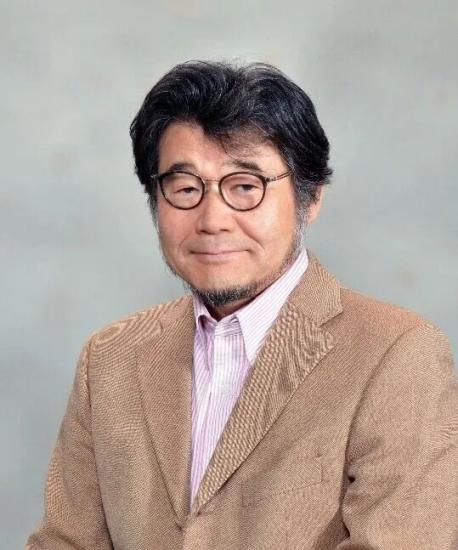
Biography: Maruyama Shigeo
Maruyama Shigeo was born in Tokyo, Japan, in March 1960. He is currently a Professor at the College of Mechanical Engineering, Zhejiang University, and was elected as a Foreign Member of the Chinese Academy of Engineering (CAE) in 2025.
He received his B.E. in Naval Mechanical Engineering from the University of Tokyo in March 1983, followed by his M.E. and Ph.D. in Mechanical Engineering in March 1985 and March 1988, respectively. He served on the faculty at the University of Tokyo for 37 years, progressing from Assistant, Lecturer, Associate Professor to Professor and Distinguished Professor. During this period, he served multiple terms as the Head of the Department of Mechanical Engineering.
From April 1989 to March 1991, he was a Visiting Scholar at Rice University, USA, working with Nobel Laureate in Chemistry, Professor Richard Smalley. In April 2025, he joined Zhejiang University full-time as a Qiushi Chair Professor.
He was elected a Fellow of the Japan Society of Mechanical Engineers (JSME) in 2007. He served as the President of the Fullerene Nanotube Research Society of Japan (FNTG) from 2011 to 2019, and has served as the Chair of the International Symposium on Carbon Nanotubes, Fullerenes, and Graphene (NT) since 2016. He was elected a Fellow of the Royal Society of Chemistry (UK) in 2019. In 2023, he received the JSME Lifetime Achievement Award and was elected as a Member of the Japan Academy of Engineering.
Research Achievements
Professor Maruyama has been engaged in micro/nano-scale research since the 1990s. Over the course of more than 40 years at the University of Tokyo, he has conducted systematic and groundbreaking studies in the fundamental theories, methodologies, and fabrication technologies of atomic-scale materials, establishing significant international influence.
He has authored over 470 academic papers published in top-tier international journals such as Science, Nature Nanotechnology, Science Advances, and PNAS. His work has garnered over 25,000 citations, with a single paper receiving more than 1,500 citations.
Key Research Achievements:
1.Synthesis of Single-Walled Carbon Nanotubes (SWNTs): He invented the low-temperature synthesis method for SWNTs—ethanol Chemical Vapor Deposition (CVD). Based on this, he pioneered the world's first vertically aligned SWNT arrays.
2.Atomic-Scale Structure Engineering: He achieved the controllable construction of minimal surface structures at the atomic level. He also pioneered coaxial hetero-nanotubes, realizing the world's first one-dimensional Van der Waals heterojunctions.
3.Nanoscale Heat Transfer Research: He established a methodological framework for studying heat transfer at micro/nano scales using Molecular Dynamics (MD) simulations. Through this, he discovered non-traditional heat transfer phenomena specific to the nanoscale.