
报告主题:3D Printing of Micro Objects by Two Photon Polymerization Method
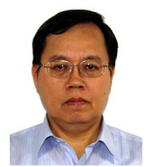
报告人:钟添东教授(Prof. Tien-Tung Chung)
时间:2015年12月9日上午10点
地点:玉泉校区教7-602多媒体教室
报告人简介:Dr. Tien-Tung Chung was born in Taiwan in 1953. He received his B.S. degree in Dept. of Power Mechanical Engineering from National Tsing-Hua University, Taiwan in 1976, and the M.S. and Ph.D. degrees in Dept. of Mechanical Engineering from National Taiwan University in 1980 and 1986 respectively. In 1986, he joined the faculty of the Dept. of Mechanical Engineering, National Taiwan University as a lecturer. He was promoted as an associate professor in 1987. He was also a visiting scholar in Dept. of Mechanical, Aerospace, and Nuclear Engineering, University of California, Los Angeles, USA, during 1991/09 ~ 1992/08. His research fields focused on structural optimization, finite element analysis, CAD/CAE, reverse engineering of 3D objects, and design of ultra-high vacuum systems, etc. Recently, his research projects include design and analysis of precision planar motion stages, 3D printing of micro objects by Two-Photon Polymerization methods, 3D printing of human coronary artery, and 3D printing of artificial corneas.
讲座摘要:Two Photon Polymerization (TPP) is a powerful technology that can be used for three-dimensional (3D) printing of complex functional micro objects. It is a laser-based prototyping technique with full 3D capability and sub-micron resolution. We study the development of design and fabrication processes based on 532 nanometer Q-switched Nd: YAG green lasers and commercial materials Polymer 3015 and ORMOCOMP. Micro lasers with sub-nanosecond pulses of visible light are efficient and low cost for two-photon micro fabrication. Polymerization is easily obtained with milliwatt average powers (12 kHz repetition rate). A computer aided manufacturing (CAM) software has been developed to design several micro objet 3D models in AutoCAD, calculate their laser trajectories, and drive the laser to polymerize polymer resins. It is an open platform for design of 3D solids with full access to entities information, and an efficient slicing command that can cut solids from any orientation plane. Micro objects, such as name cards, gratings, springs, gears, spherical lenses, Fresnel zone plate lenses, and valves, have been successfully manufactured with good quality.